
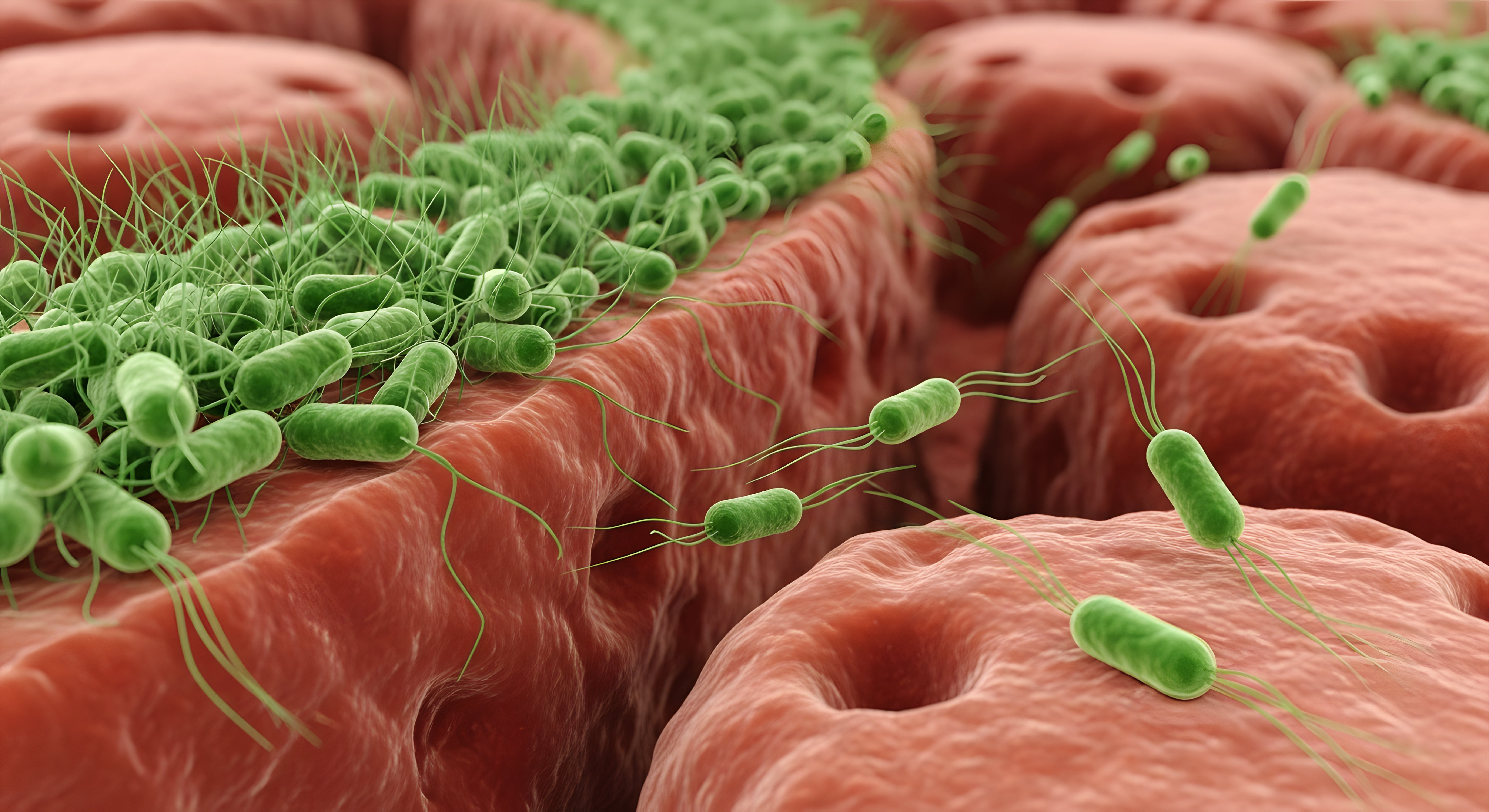
Most conversations about metabolic health focus on diet, exercise, and medication. What has historically received less attention is the role the gut microbiome plays in regulating metabolic function, and how specific microorganisms and their byproducts can influence processes like blood sugar regulation, body composition, and appetite. Two ingredients are beginning to change that conversation: Akkermansia muciniphila, a bacterium that lives in the gut lining, and heat-treated Bifidobacterium animalis subs. lactis (BPL1®), a postbiotic derived from a beneficial gut bacterium. Each works through distinct mechanisms, and together they offer a complementary approach to supporting both gut and metabolic health.
What is Akkermansia muciniphila?
Akkermansia muciniphila (A. muciniphila) is a bacterium that lives in the mucus layer of the intestinal tract and has recently become one of the most studied microorganisms in gut health research [1]. It is often referred to as a keystone species, meaning that even in small amounts, it plays a disproportionately important role in keeping the broader microbial community healthy [1,2].
One of its primary functions involves the gut's mucus layer. The intestinal lining is coated in mucus, which acts as a protective barrier between the contents moving throughout the intestinal tract and the cells beneath. A. muciniphila uses the proteins in this mucus layer as its main fuel source, and in doing so produces short-chain fatty acids (SCFAs). These small molecules fuel the cells lining the gut and help maintain a strong intestinal barrier [2,3]. The process also feeds other beneficial bacteria in the gut, helping support a healthier microbial environment overall. Additionally, it also helps renew the cells that produce mucus and supports immune signaling within the gut lining [4,5]. Notably, observational research consistently shows that A. muciniphila is found at lower levels in people with prediabetes, type 2 diabetes, obesity, and inflammatory bowel disease compared to healthy individuals [1,6,7].
Akkermansia and Metabolic Health
Beyond its role in the gut’s structure and microbial balance, A. muciniphila has drawn attention for its potential influence on metabolic health, particularly in its relationship with a well-known hormone called glucagon-like peptide-1 (GLP-1).
GLP-1 is produced by cells in the intestinal lining and plays a key role in regulating blood sugar. Under normal circumstances, it signals the pancreas to release insulin after a meal, helps suppress appetite, and supports overall metabolic health [8]. It is also the hormone targeted by widely used GLP-1 receptor agonists like semaglutide. What is less widely known is that the gut microbiome may influence how much GLP-1 the body produces on its own.
Some of the most interesting research on A. muciniphila involves GLP-1. Early research has found that A. muciniphila may support the body's own GLP-1 production, with recent laboratory findings showing over a 2,000% increase in GLP-1 secretion from human intestinal cells, though more clinical research is still needed to understand what this means in clinical practice [9,10,11].
Another key area where A. muciniphila shows promise is body composition. In a randomized controlled trial of 58 overweight or obese adults with type 2 diabetes, those with the lowest baseline levels of A. muciniphila in their gut who supplemented with live A. muciniphila experienced significant reductions in body weight, fat mass, visceral fat, blood sugar, and cholesterol compared to those who did not [12]. Results were greatest in those who started with the lowest amount of A. muciniphila at baseline, suggesting that the amount you already have in your gut may influence how much you benefit from supplementation.
What Is BPL1®?
BPL1® is a heat-treated postbiotic derived from Bifidobacterium animalis subsp. lactis (CECT 8145), meaning it is made from bacteria that have been intentionally inactivated, while still retaining the ability to influence the body [13]. Unlike live probiotics, which need to survive digestion and establish themselves in the gut in order to be effective, postbiotics act through the structural components left behind after being heat-treated. In other words, the bacteria no longer need to be alive to have an effect on the body. In the case of BPL1®, the key active component is a molecule found in the cell wall called lipoteichoic acid. This molecule appears to interact with the body's insulin signaling pathway, which plays a critical role in how the body manages fat storage and blood sugar. In preclinical research, activating this pathway was associated with reductions in fat accumulation, including under conditions of elevated blood sugar [14].
The evidence behind BPL1® is growing, and several clinical studies have reported promising results. In a 12-week study of 135 adults with abdominal obesity, daily supplementation with BPL1® produced significant reductions in waist circumference, abdominal fat, visceral fat, insulin resistance, and blood pressure compared to placebo, with the strongest effects on fat loss seen in women [13]. Visceral fat, which accumulates around internal organs rather than just under the skin, carries higher metabolic consequences, making these reductions particularly meaningful. While Akkermansia works from within the gut ecosystem, BPL1® appears to influence how the body stores and breaks down fat, targeting metabolic health from a different angle.
What Makes This Pairing Unique
A. muciniphila and BPL1® target metabolic health through different mechanisms, which is what makes them such a well-suited pair. A. muciniphila works from within the gut, maintaining the mucus layer, producing SCFAs, supporting microbial balance, and promoting the body's natural GLP-1 production. BPL1® works at a different level, interacting with pathways that influence how the body stores and breaks down fat.
What makes this combination particularly interesting is that, in the same clinical trial in which BPL1® showed body composition benefits, supplementation was also associated with increased Akkermansia levels in the gut [13]. While this finding was not statistically significant between groups, the rise in Akkermansia correlated with more favorable changes in body weight, raising the possibility that BPL1® may support metabolic health in part by encouraging the growth of Akkermansia itself [13].
These two ingredients approach metabolic health from different angles, but the research suggests they may reinforce each other in ways that go beyond what either does alone. As the science on the gut–metabolic connection continues to develop, Akkermansia and BPL1® represent a shift in how metabolic health is understood, one that focuses less on calories and willpower and more on what is actually happening in the gut. For those interested in supporting metabolic health at a foundational level, targeting both the gut ecosystem and the body's own metabolic signaling pathways may be a more powerful approach than previously thought.
References:
- Aja E, Zeng A, Gray W, Connelley K, Chaganti A, Jacobs JP. Health effects and therapeutic potential of the gut microbe Akkermansia muciniphila. Nutrients. 2025;17(3):562. doi:10.3390/nu17030562
- Yan J, Sheng L, Li H. Akkermansia muciniphila: is it the Holy Grail for ameliorating metabolic diseases? Gut Microbes. 2021;13(1):1984104. doi:10.1080/19490976.2021.1984104
- Belzer C, Chia LW, Aalvink S, et al. Microbial metabolic networks at the mucus layer lead to diet-independent butyrate and vitamin B12 production by intestinal symbionts. mBio. 2017;8(5):e00770-17. doi:10.1128/mBio.00770-17
- Kim S, Shin YC, Kim TY, et al. Mucin degrader Akkermansia muciniphila accelerates intestinal stem cell-mediated epithelial development. Gut Microbes. 2021;13(1):1-20. doi:10.1080/19490976.2021.1892441
- Qu D, Chen M, Zhu H, et al. Akkermansia muciniphila and its outer membrane protein Amuc_1100 prevent high-fat diet-induced nonalcoholic fatty liver disease in mice. Biochem Biophys Res Commun. 2023;684:149131. doi:10.1016/j.bbrc.2023.149131
- Letchumanan G, Abdullah N, Marlini M, et al. Gut microbiota composition in prediabetes and newly diagnosed type 2 diabetes: a systematic review of observational studies. Front Cell Infect Microbiol. 2022;12:943427. doi:10.3389/fcimb.2022.943427
- Earley H, Lennon G, Balfe Á, Coffey JC, Winter DC, O'Connell PR. The abundance of Akkermansia muciniphila and its relationship with sulphated colonic mucins in health and ulcerative colitis. Sci Rep. 2019;9(1):15683. doi:10.1038/s41598-019-51878-3
- Holst JJ. The physiology of glucagon-like peptide 1. Physiol Rev. 2007;87(4):1409-1439. doi:10.1152/physrev.00034.2006
- Arukha AP, Nayak S, Swain DM. Effect of Akkermansia muciniphila on GLP-1 and insulin secretion. Nutrients. 2025;17(15):2516. doi:10.3390/nu17152516
- Tolhurst G, Heffron H, Lam YS, et al. Short-chain fatty acids stimulate glucagon-like peptide-1 secretion via the G-protein-coupled receptor FFAR2. Diabetes. 2012;61(2):364-371. doi:10.2337/db11-1019
- Yoon HS, Cho CH, Yun MS, et al. Akkermansia muciniphila secretes a glucagon-like peptide-1-inducing protein that improves glucose homeostasis and ameliorates metabolic disease in mice. Nat Microbiol. 2021;6(5):563-573. doi:10.1038/s41564-021-00880-5
- Zhang Y, Liu R, Chen Y, et al. Akkermansia muciniphila supplementation in patients with overweight/obese type 2 diabetes: efficacy depends on its baseline levels in the gut. Cell Metab. 2025;37(3):592-605.e6. doi:10.1016/j.cmet.2024.12.010
- Pedret A, Valls RM, Calderón-Pérez L, et al. Effects of daily consumption of the probiotic Bifidobacterium animalis subsp. lactis CECT 8145 on anthropometric adiposity biomarkers in abdominally obese subjects: a randomized controlled trial. Int J Obes (Lond). 2019;43(9):1863-1868. doi:10.1038/s41366-018-0220-0
- Balaguer F, Enrique M, Llopis S, et al. Lipoteichoic acid from Bifidobacterium animalis subsp. lactis BPL1: a novel postbiotic that reduces fat deposition via IGF-1 pathway. Microb Biotechnol. 2022;15(3):805-816. doi:10.1111/1751-7915.13769