
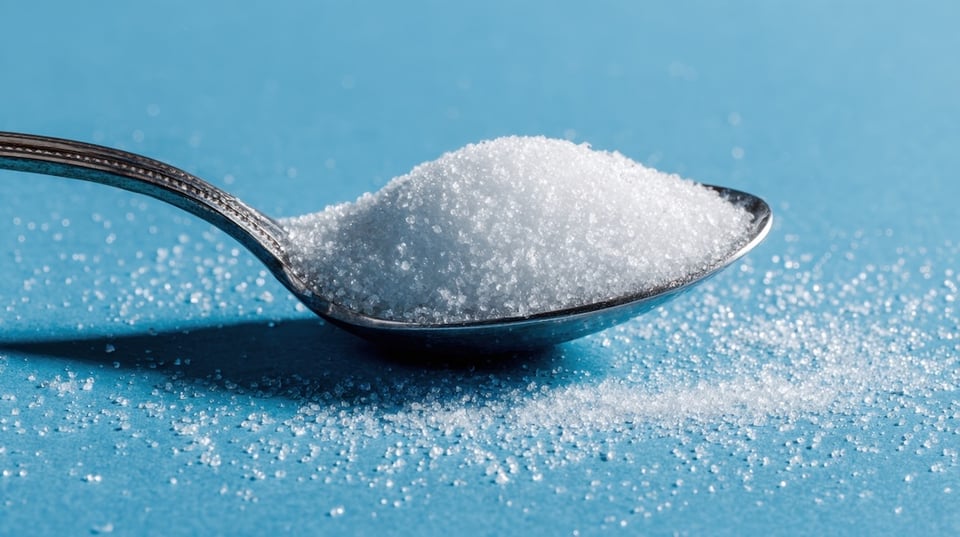
Excess intake of added sugars is strongly associated with obesity, insulin resistance, and type 2 diabetes (T2D), making dietary sugar reduction a central target of metabolic health interventions. While low-calorie sweeteners can reduce energy intake, many do not meaningfully influence postprandial glucose and insulin responses. As a result, there is growing interest in alternatives that provide sweetness while also supporting metabolic regulation.
Allulose (D-psicose) is a rare monosaccharide with approximately 70% of the sweetness of sucrose and minimal caloric contribution. In contrast to stevia, which exhibits sweetness at 250 to 300 times that of sucrose, allulose more closely resembles sugar in its degree of sweetness. Structurally similar to fructose, allulose occurs naturally in small amounts in foods such as dried fruits and brown sugar. Allulose has been designated Generally Recognized as Safe (GRAS) by the FDA and has attracted attention for its potential to attenuate postprandial glycemic responses when consumed with carbohydrate. Evidence suggests that allulose may influence metabolic physiology beyond simple sugar replacement, positioning it as a functional ingredient with potential relevance for glycemic control.
Metabolic Characteristics of Allulose
Unlike many conventional low-calorie sweeteners, allulose demonstrates metabolic properties that extend beyond simple energy reduction. First, it provides less than 0.4 kcal per gram compared with approximately 4 kcal per gram for sucrose, representing roughly a 90% reduction in caloric content while still maintaining about 70% of sucrose’s sweetness.
Following ingestion, allulose is absorbed primarily in the small intestine but is not substantially metabolized for energy. Approximately 70% is excreted unchanged in the urine, while the remainder passes into the large intestine and is eliminated in the feces with minimal fermentation. Despite systemic absorption, controlled human studies consistently show that allulose does not raise postprandial glucose or insulin levels when consumed on its own.
Effects on Postprandial Glucose and Insulin
Both clinical and animal research consistently demonstrates that allulose helps reduce postprandial glucose and insulin levels, particularly when consumed alongside rapidly absorbable carbohydrates. In a randomized crossover trial, adding 15 g of allulose to sucrose reduced overall postprandial glucose exposure by approximately 24% and peak glucose rise by nearly 46%, while insulin exposure decreased by about 33% compared with sucrose alone.
Dose-response studies indicate that smaller amounts, such as 5 to 10 g, can also significantly reduce postprandial glucose levels in healthy adults. Similar benefits have been observed in individuals with impaired glucose tolerance, where allulose suppressed post-meal glucose elevations without inducing hypoglycemia during long-term intake.
Acute ingestion has additionally been associated with increased secretion of satiety hormones such as glucagon-like peptide-1 (GLP-1), which may further support glycemic regulation. Taken together, these findings suggest that allulose functions not only as a low-calorie sweetener but may also be a metabolically active compound that helps flatten postprandial glucose and insulin spikes.
Proposed Mechanisms Supporting Glycemic Control
Despite contributing minimal energy, allulose appears to influence glucose metabolism through several key pathways. One proposed mechanism is through the inhibition of intestinal α-glucosidase, an enzyme involved in carbohydrate digestion, which may slow the release of glucose from dietary starch and reduce the rate of glucose entry into the bloodstream. At smaller doses of just 5 to 10 grams, allulose has also been shown to delay intestinal glucose absorption, helping explain the blunted rise in blood sugar after meals.
In addition to effects within the gastrointestinal tract, allulose may enhance hepatic glucose uptake and promote glycogen synthesis, leading to more efficient clearance of circulating glucose following carbohydrate intake. Emerging evidence suggests that consumption of 25 grams of allulose can also stimulate secretion of GLP-1, helping support glucose-dependent insulin secretion, slowing gastric emptying, and contributing to appetite regulation.
Together, these mechanisms provide a plausible explanation for the consistent reductions in postprandial glucose and insulin responses observed in human studies.
Clinical Implications for Metabolic Health
Although reducing overall intake of added sugars remains a cornerstone of metabolic disease prevention, practical adherence to low-sugar dietary patterns can be challenging. Substituting metabolically neutral or beneficial sweeteners may therefore represent a useful adjunct strategy. Evidence suggests that allulose can help blunt postprandial glucose and insulin responses without contributing significant energy, making it a potential tool for improving glycemic control while maintaining dietary palatability.
While these effects are relevant for healthy individuals seeking to minimize glycemic variability, they may be particularly beneficial for populations with impaired glucose regulation, including insulin resistance, obesity, and type 2 diabetes. By dampening post-meal glucose excursions and reducing insulin demand, allulose may support metabolic stability and reduce the physiological stress associated with repeated glycemic spikes.
Conclusion
Allulose is a rare sugar that provides sweetness with minimal caloric contribution and negligible glycemic impact when consumed alone. When ingested with carbohydrate, evidence from human studies indicates that it can help attenuate postprandial glucose and insulin responses through multiple mechanisms.
Rather than serving as a replacement for comprehensive dietary and lifestyle interventions, allulose may function as a practical tool for reducing added sugar intake while maintaining palatability. As efforts increase to reduce sugar intake without sacrificing sweetness, allulose may offer a useful alternative that helps limit postprandial blood glucose spikes.
Learn more about glycemic control:
Allulose — New Sweetener on the Block
Reduced-Carb, High-Protein Diet May Improve Glycemic Variability
We Are What We Eat: Frightful Facts about the Standard American Diet
