
The body has robust detoxification capabilities built in. In particular, the liver has two main phases of detoxification: Phase I (bioactivation) and Phase II (conjugation). Phase I transforms toxins, and Phase II neutralizes their byproducts. The body then eliminates the transformed byproducts through urine and feces during Phase III. The body’s ability to properly detoxify substances depends heavily on having the proper nutrients, and protein is at the top of the list. Detox programs aimed at supporting detoxification and elimination typically include essential nutritive compounds that must be replenished through the diet or supplementation to help the body carry out these processes efficiently.
The nutritive compounds required to transform pharmaceuticals, steroids, tobacco, alcohol, caffeine, and carcinogens into intermediary metabolites include vitamins, minerals, amino acids, and antioxidants. Vitamins, or coenzymes, are required during Phase I. These secondary metabolites are more reactive and require additional processing before they can be excreted from the body. This requires Phase II conjugation, which attaches a specific molecule to the intermediary metabolite, transforming it into less reactive, more water-soluble compounds that can be excreted through the urine or feces. There are six well-recognized Phase II conjugation pathways, including amino acid conjugation, glucuronidation, glutathione conjugation, acetylation, sulfation, and methylation.
Amino Acids and Key Phase II Detoxification Pathways
Glutathione conjugation is one of the most critical Phase II detoxification pathways, relying on the tripeptide glutathione, which is composed of glutamine, cysteine, and glycine. Glutathione’s main function in the Phase II pathway is to neutralize toxins generated during Phase I. Research shows that cysteine is the rate-limiting amino acid for glutathione synthesis. When dietary sulfur-containing amino acids, such as methionine and cysteine, are restricted, glutathione production decreases significantly, and the body begins conserving these amino acids by reducing oxidation. This adaptive response underscores the substantial biochemical need for sulfur amino acids to maintain glutathione availability, support redox balance, and prevent the accumulation of reactive oxygen species (ROS).
Beyond glutathione’s central role, amino acid conjugation represents another major Phase II pathway directly dependent on amino acid availability. In this pathway, the liver attaches amino acids such as glycine, taurine, glutamine, arginine, and ornithine to xenobiotics, increasing their water solubility and promoting urinary or biliary excretion. Glycine, for example, is crucial for bile acid conjugation, which facilitates the removal of fat-soluble toxins through bowel movements. Taurine supports conjugation processes and plays a key role in maintaining bile composition and digestive enzyme activity. Meanwhile, sulfur-containing amino acids contribute to sulfation pathways, and amino acids such as methionine, through its metabolite S-adenosylmethionine (SAMe), support methylation reactions involved in detoxification and one-carbon metabolism. Together, these pathways illustrate that detoxification is fundamentally an amino acid-driven process. Without sufficient protein intake to supply these substrates, Phase II pathways cannot effectively conjugate and eliminate the reactive intermediates generated during Phase I, leading to recirculation of hormones and other toxins, increased oxidative stress, and reduced detoxification capacity.
What Are Proteins, Amino Acids, and Peptides?
Proteins are made up of varying sequences of the 20 different amino acids that are found in the human body. Amino acids are known to be the “building blocks for proteins” because when protein is consumed at a meal, the body’s digestive system breaks proteins apart into amino acids. The body can then use the free pool of available amino acids to build essential peptides that support biological processes. One may also consume targeted, isolated amino acids in supplemental form (e.g., glycine, glutamine, taurine). Peptides are made up of two or more amino acids in a specific sequence. As stated, amino acids and peptides are required for the normal function of the detoxification system. One peptide in particular, glutathione, is the primary endogenous antioxidant. Similar to free-form amino acids, one can consume supplemental bioactive peptides in a pre-formed, absorbable state for potential clinical benefits.
How Much Protein Should You Consume During a Detoxification Program?
Given the extensive role of amino acids in Phase I and Phase II detoxification, structured detoxification programs generally require higher protein intake than the standard dietary recommendations. While the RDA for protein is 0.8 g/kg of body weight per day (g/kg/day), this value reflects the minimum threshold needed to prevent deficiency, not the optimal intake for individuals undergoing increased metabolic demands, such as during a detox protocol.
For most adults engaging in a guided detoxification program, a protein intake of 1.0 to 1.1 g/kg/day is appropriate to support conjugation pathways, glutathione synthesis, and antioxidant support. For a person weighing 75 kg (165 pounds), total protein would fall in the range of 75 to 83 g per day.
Several factors can influence when an individual may require a higher protein intake. For instance, individuals with higher toxin exposure (e.g., environmental chemicals, medications, alcohol), those engaged in regular exercise, individuals under physiological stress, or those with increased metabolic turnover may benefit from the upper range. Adequate protein intake is particularly important for individuals with genetic detoxification polymorphisms (e.g., GSTM1/GSTT1 deletions), as their systems may rely more heavily on amino acid-driven conjugation pathways.
In contrast, individuals who are younger, more sedentary, have lower body mass, or are easing into a detoxification protocol may do well with a lower or moderate protein intake (still above the RDA; between 0.8 to 1.0 g/kg/day). This level still provides the foundational amino acid substrates for glutathione production and Phase II conjugation pathways without exceeding digestive or metabolic capacity.
The overarching goal is to maintain a steady influx of amino acids to avoid bottlenecks in Phase II detoxification. An insufficient protein intake during a detox protocol may impair glutathione synthesis, slow amino acid conjugation, and allow reactive intermediates generated during Phase I to accumulate in the body, thereby counteracting the program's purpose.
High-Protein Foods to Support Detoxification
Choosing high-quality protein sources is essential, as amino acid composition varies considerably between foods. During a detoxification program, prioritizing minimally processed, nutrient-dense proteins helps ensure the availability of sulfur amino acids, glycine, taurine, and the branched-chain amino acids crucial for Phase I and Phase II activity.
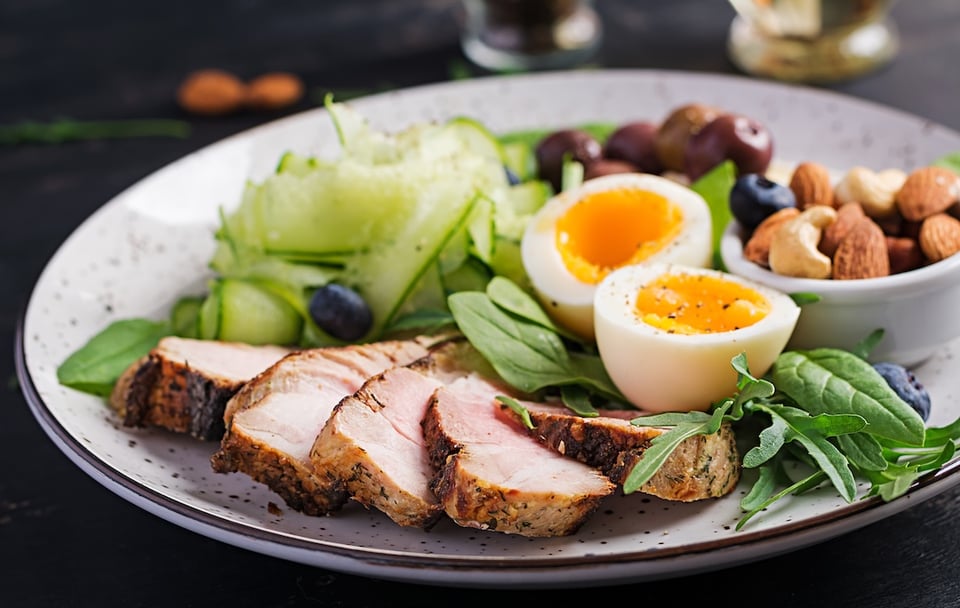
High-Protein Foods for Meat-Based Diets
These sources naturally provide rich amounts of methionine, cysteine, glycine, leucine, taurine, and arginine:
- Eggs: Rich in methionine, choline, cysteine, and B vitamins needed for methylation and transsulfuration
- Chicken and turkey: Lean, bioavailable protein supporting BCAA intake
- Grass-fed beef and bison: Excellent sources of glycine-rich connective tissue, methionine, and cysteine
- Fish and shellfish: Provide taurine (crucial for bile acid conjugation), selenium (a glutathione peroxidase cofactor), and highly bioavailable protein
- Bone broth: Naturally rich in glycine, proline, and hydroxyproline, all essential for collagen turnover and amino acid conjugation
- Greek yogurt or cottage cheese: Offer leucine-rich protein for muscle and ammonia detoxification support
- Organ meats (when tolerated): Extremely nutrient-dense sources of B vitamins, methionine, and glutathione-related cofactors
High-Protein Foods for Plant-Based Diets
A well-planned plant-forward approach can fully support detoxification needs when protein sources are diverse and strategically combined. Many of the following contain glycine, arginine, methionine (in varying amounts), and supportive micronutrients:
- Legumes: Lentils, chickpeas, black beans, and soybeans offer arginine, glycine, and glutamine
- Tofu, tempeh, and edamame: Provide complete proteins and unique bioactive peptides known to enhance antioxidant enzyme activity
- Pea protein and hemp protein: Rich in arginine and BCAAs; common foundational proteins in detoxification shakes
- Quinoa and amaranth: Complete plant proteins providing methionine and cysteine precursors
- Pumpkin seeds, chia seeds, and sunflower seeds: Arginine-dense and supportive of nitric oxide and urea cycle metabolism
- Oats: Often included in detoxification blends for their balanced amino acid profile and glutamine content
- Nutritional yeast: Contains B vitamins and protein supportive of methylation capacity
- Plant-based collagen boosters (e.g., glycine or proline powders): Can complement the inherently lower glycine content of many plant proteins
Protein is far more than a macronutrient. Within the context of detoxification, it serves as the biochemical backbone of nearly every metabolic pathway involved in processing, neutralizing, and eliminating toxins. Amino acids drive the transformation and conjugation of reactive intermediates, support glutathione regeneration, and sustain the antioxidant defenses necessary for cellular resilience.
Therefore, a structured detoxification program cannot be effective without sufficient protein and targeted amino acids. Whether obtained through food or supplementation, protein intake must be adequate to meet the increased physiological demands of detoxification, ensuring each phase operates efficiently.
To learn more about the human microbiome:
Supportive Nutrients for Phase I Liver Detoxification
Supportive Nutrients for Phase II Liver Detoxification
The Role of Soluble Fiber in Detoxification
The Role of NAC in Detoxification Pathways
By Bri Mesenbring, MS, CNS, LDN
