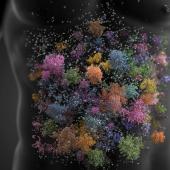

Over the years, probiotic formulations have typically relied on oxygen-tolerant bacteria like Lactobacillus and Bifidobacterium, largely because these strains can survive the standard manufacturing process. While they commonly offer clinical benefits, these strains alone do not fully reflect the types of bacteria that characterize a healthy, stable gut microbiome.
Many of the bacteria most consistently associated with a healthy, resilient gut microbiome are considered keystone commensals. These organisms play important roles in maintaining microbiome stability through functions such as short-chain fatty acid production, mucin support, and metabolic cross-feeding with other beneficial microbes. Several keystone commensal species, including Faecalibacterium prausnitzii (F. prausnitzii) and Roseburia intestinalis (R. intestinalis), are obligate anaerobes, meaning they cannot survive in the presence of oxygen.
Standard probiotic manufacturing involves processes such as fermentation, harvest, freeze-drying, and encapsulation, all of which expose bacteria to oxygen at some point. While oxygen-tolerant organisms can generally survive this process, obligate anaerobes such as F. prausnitzii and R. intestinalis cannot survive when exposed to oxygen and become inviable during probiotic manufacturing. As a result, commercially available probiotics have historically excluded many keystone commensal organisms that help provide a more complete and resilient gut ecosystem.
This manufacturing barrier has important clinical implications. Faecalibacterium prausnitzii and Roseburia intestinalis are often found at lower levels in people with inflammatory, metabolic, and neurological conditions. At the same time, large microbiome studies have shown that these bacteria are common and stable components of a healthy gut. Until recently, there has not been a practical way to include them in a shelf-stable probiotic product. However, a patent-pending anaerobic manufacturing platform, Microbial Ecosystem Therapeutics (MET), is now beginning to address this limitation.
From FMT to MET
Fecal microbiota transplantation (FMT) is a procedure that transfers stool from a healthy donor into the gut of someone with a disrupted microbiome. It was one of the first approaches to show that restoring a full community of microbes, including oxygen-sensitive anaerobes, could help rebalance the gut. This has been especially effective in treating recurrent Clostridioides difficile (C. diff) infection. At the same time, FMT comes with important limitations, as it relies on donor stool, which can vary from sample to sample, and raises safety and regulatory concerns that make it difficult to standardize for broader use.
These limitations led to the development of Microbial Ecosystem Therapeutics (MET). Instead of transferring whole stool, MET isolates specific anaerobic strains from a single, rigorously screened donor and cultures them under oxygen-free conditions. This results in a reproducible formulation that avoids many of the downsides and safety concerns associated with FMT. In early clinical studies, MET has demonstrated the ability to resolve recurrent C. difficile infection in patients who did not respond to standard therapies. As a result, MET follows the same ecological approach as FMT while using cultured, standardized bacterial strains instead of relying on repeated donor stool transfers.
What MET Technology Does
The key advancement behind MET is the ability to culture and manufacture anaerobic bacteria under controlled, oxygen-free conditions throughout the entire production process. The finished product uses packaging designed to limit exposure to moisture, oxygen, and light, helping to maintain viability without refrigeration.
Beyond oxygen control, MET also focuses on selecting organisms that function together. Instead of combining unrelated strains, these formulations are built around bacteria involved in cross-feeding networks and metabolic activity. This more closely reflects how these organisms behave within a healthy gut ecosystem.
Why These Organisms Matter
One of the most notable outcomes of this approach is the ability to include keystone commensal organisms that have not previously been available in probiotic products. Faecalibacterium prausnitzii typically accounts for approximately 5% of the gut microbiota in healthy adults. Considering that the gut microbiome contains thousands of different microbial species, this percentage represents a substantial presence within the gut ecosystem. It is a major producer of butyrate, a short-chain fatty acid that plays a central role in supporting gut barrier integrity and immune regulation. Reduced abundance of this keystone species has been observed across conditions including inflammatory bowel disease (IBD), type 2 diabetes, major depressive disorder, and Parkinson's disease.
Roseburia intestinalis is another keystone commensal probiotic that represents roughly 2% to 5% of the adult gut microbiota and is similarly recognized as a butyrate-producing keystone species. It is reduced across a range of inflammatory and metabolic conditions, including ulcerative colitis, Crohn's disease, obesity, and type 2 diabetes. These organisms have been extensively studied, but until now, could not be incorporated into probiotic formulations due to their oxygen sensitivity.
With MET-based approaches, these keystone species can now be combined with other keystone commensal organisms such as Akkermansia muciniphila, Bifidobacterium longum, and Bifidobacterium adolescentis. These organisms participate in complementary metabolic pathways and cross-feeding relationships that help support overall microbiome stability.
Summary
Many of the keystone commensal bacteria most strongly associated with a healthy, resilient gut microbiome have historically been excluded from commercial probiotics due to their sensitivity to oxygen. Advances in anaerobic manufacturing, particularly through MET, now allow for the reliable production and delivery of these organisms, including species such as F. prausnitzii and R. intestinalis that were previously unavailable in probiotic formulations. This represents a larger shift toward incorporating clinically relevant anaerobic strains that previous manufacturing methods could not support.
Learn more about keystone commensals and the gut microbiome:
The Gut Ecosystem: Why Biodiversity Matters
What Are Keystone Probiotic Species?
The New Way to Support Gut Health: Keystone Commensal Probiotics
Not All Probiotics Are Created Equal
By Jesse Martin, M.S.
Designs for Health has been dedicated to being the most trusted source for superior quality, science-based nutritional products for nearly three decades. We’re committed to maximizing successful health outcomes by providing healthcare practitioners with comprehensive support through our extensive product line, ongoing clinical education, and practice development programs. The blogs we publish here cover a range of topics, including new and original approaches to diet and healthcare, analyses of the latest cutting-edge research, deep-dives into specific nutrients, botanicals, nutraceuticals and more, all fully referenced for those who want to dig deeper into the primary literature.