
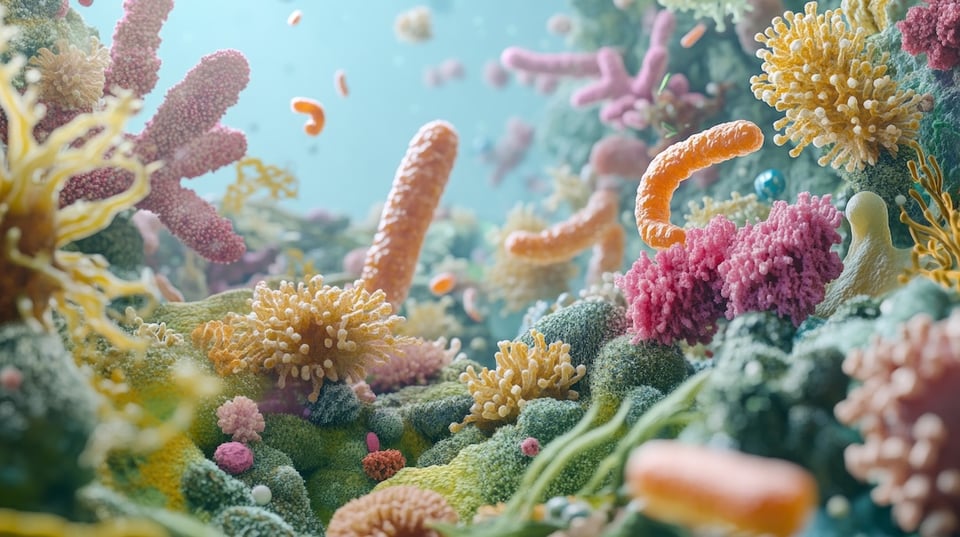
Imagine the gastrointestinal (GI) tract as a lush natural ecosystem teeming with life. Just as a rainforest relies on many species living together in harmony, the GI tract is home to trillions of microbial life forms, forming a microscopic internal ecosystem. A healthy GI tract depends on the right balance of these microbes. When the microbiome is diverse and balanced, it is better able to support digestive, immune, and overall health.
The Microbiome as a Delicate Ecosystem
A balanced gut ecosystem contains hundreds of microbial species that communicate, compete, and cooperate as an interactive community. The gut microbiome is often considered a “secondary organ system” that supports not only one or two other biological systems, but the entire human organism. Like any thriving ecosystem, the gut microbiome works best when it hosts a wide variety of inhabitants, each playing unique, collaborative roles.
However, this delicate internal ecosystem can become imbalanced. This has been seen in nature when wolves were removed from Yellowstone National Park in the 1920s in an effort to tame the natural wildlife. Over time, large elk populations flourished and overgrazed park vegetation. Wolves were reintroduced in the 1990s, and since then, vegetation, such as willows, has increased by 1,500% between 2001 and 2020, revealing that with a balanced hierarchy of life, ecosystems thrive. Similarly, losing important microbial species can throw it out of balance. Western lifestyles, which feature low-fiber diets, overuse of antibiotics, chronic stress, and sedentary behavior, have quietly diminished the diversity of the gut microbiota. These factors often deplete fragile, beneficial (or commensal) strains that have evolved with humans for generations. In fact, bacterial diversity is significantly lower in modern, industrialized societies compared to people living traditional lifestyles. When these keystone bacteria are missing, the entire gut community becomes more fragile and less resilient.
Keystone Species: The “Cornerstone” Gut Bacteria
Keystone species refer to organisms that have a disproportionately large effect on their environment relative to their abundance. In the gut, certain bacterial species act as keystone species, holding the community together and helping keep it balanced. These microbes may not be present in high amounts, but they produce vital nutrients (such as short-chain fatty acids [SCFAs]) and support the abundance of other beneficial species. For example, some key gut microbes, like Faecalibacterium prausnitzii (F. prausnitzii), act as “peacekeepers” by producing SCFAs. Others function as “wall builders,” such as Akkermansia muciniphila (A. muciniphila), by helping strengthen the gut barrier. When these keystone strains are present, they nourish other commensal bacteria and help manage the overgrowth of potentially harmful bacteria, creating a stable, self-regulating ecosystem. If these linchpin species decrease or disappear from modern living, the diversity and stability of the whole microbial ecosystem can collapse.
Unfortunately, many traditional probiotic supplements don’t include these keystone species. The most critical gut microbes, like F. prausnitzii and Roseburia intestinalis (R. intestinalis) – two keystone species – are oxygen-sensitive and not typically found in probiotics on the market today. Until recently, there was no practical way to reintroduce these bacteria. Simply eating more fiber or fermented foods may help replenish some bacteria, but research suggests that once certain keystone species are depleted, diet alone may not completely restore them. These factors influence how researchers and companies think about supporting microbial diversity when key members are lost due to modern lifestyles.
Rebuilding the Gut Ecosystem by Restoring Keystone Bacteria
A newer approach to probiotic support focuses not on adding large numbers of random, unrelated bacterial strains, but on supporting the foundational species that organize and sustain the microbial community as a whole. Rather than overwhelming the gut with bacteria that don’t permanently inhabit it, this strategy prioritizes organisms that naturally coexist and contribute to long-term ecological balance.
Ideally, this type of formulation is built around a small group of scientifically recognized keystone microbes that foster the production of beneficial compounds, like SCFAs, help maintain gut structure, support the intestinal barrier, and promote a balance among all present bacteria, honoring native microbes to re-establish and function more effectively. Importantly, these keystone species are selected based on their ability to work together as a coordinated system. Each contributes a distinct function within the gut ecosystem. Recent research recognizes keystone bacteria, including F. prausnitzii, R. intestinalis, A. muciniphila, Bifidobacterium longum (B. longum), and B. adolescentis as species that may help support a balanced, cooperative, and healthy microbial ecosystem.
Conclusion
Taken together, this ecosystem-first approach mirrors what is observed in a healthy and resilient microbiome. That is to say that stability emerges not from a single organism, but from coordinated interactions among foundational species. Just as protecting biodiversity is essential for the health of natural environments, supporting microbial diversity appears to be essential to maintain long-term gut health.
Learn more about the human microbiome:
What Are Keystone Probiotics Species?
Two Next-Generation Probiotics You Should Know About: Anaerostipes and Akkermansia
Fueling the Gut: How Anaerostipes Caccae Powers Butyrate Production
